
Last updated August 27, 2026
Free in-home measure and quote - PGT, CGI and CWS impact lines compared on your actual openings, style by style
Sliding glass doors
Impact garage doorsPGTCGI
 Before
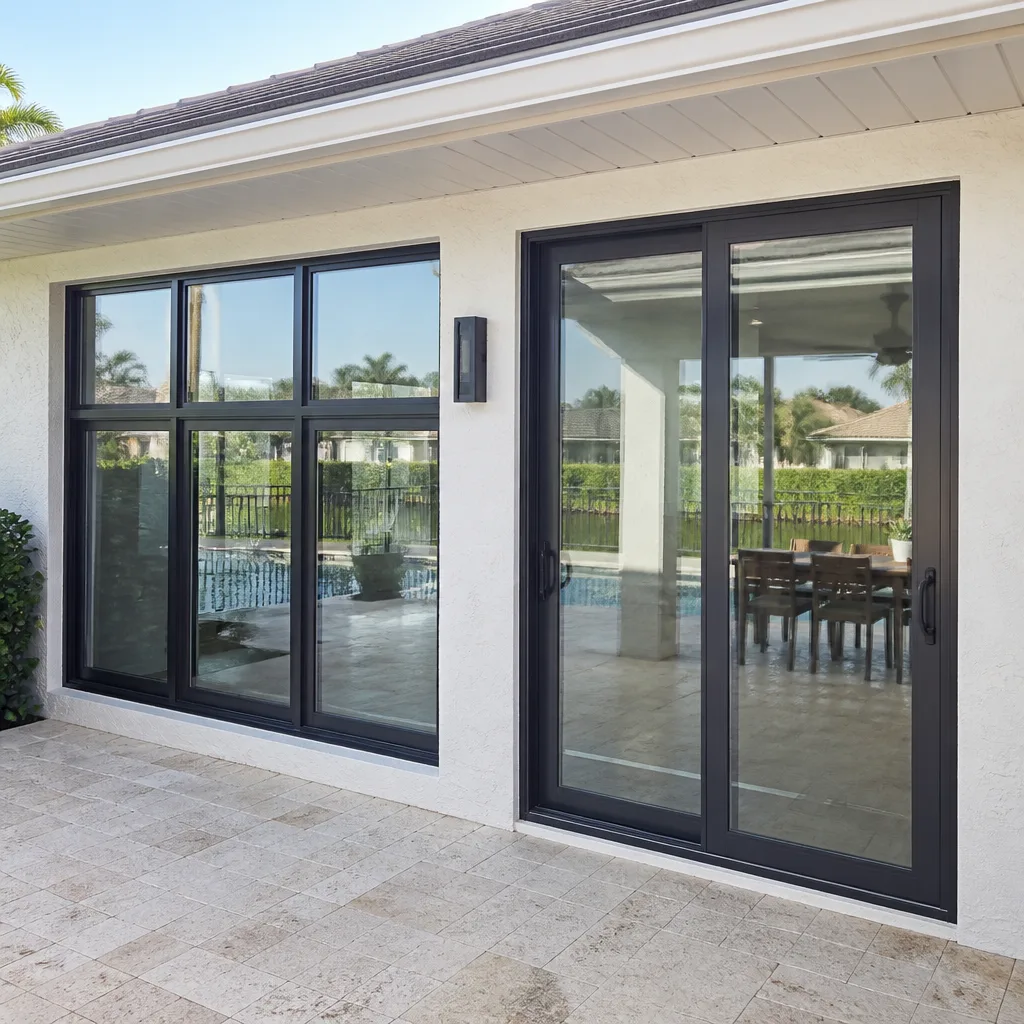 After
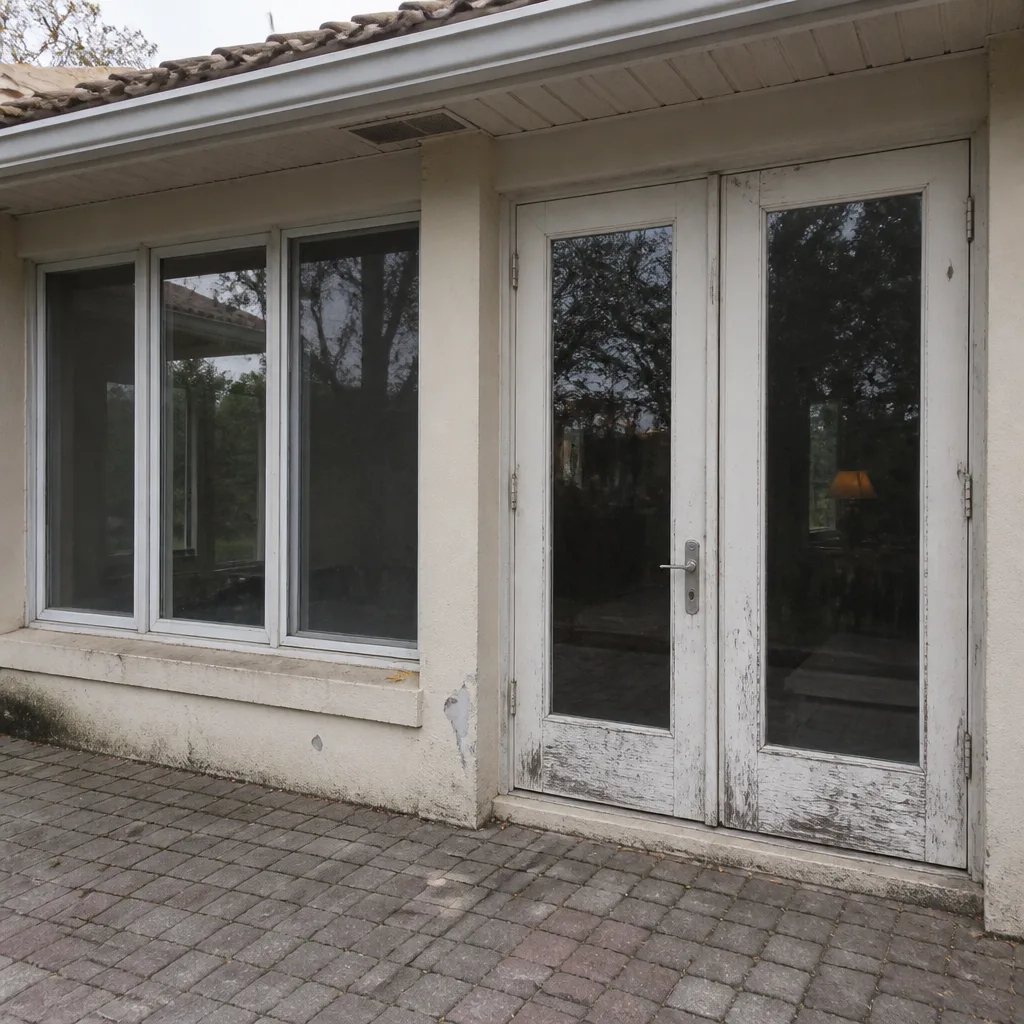 Before
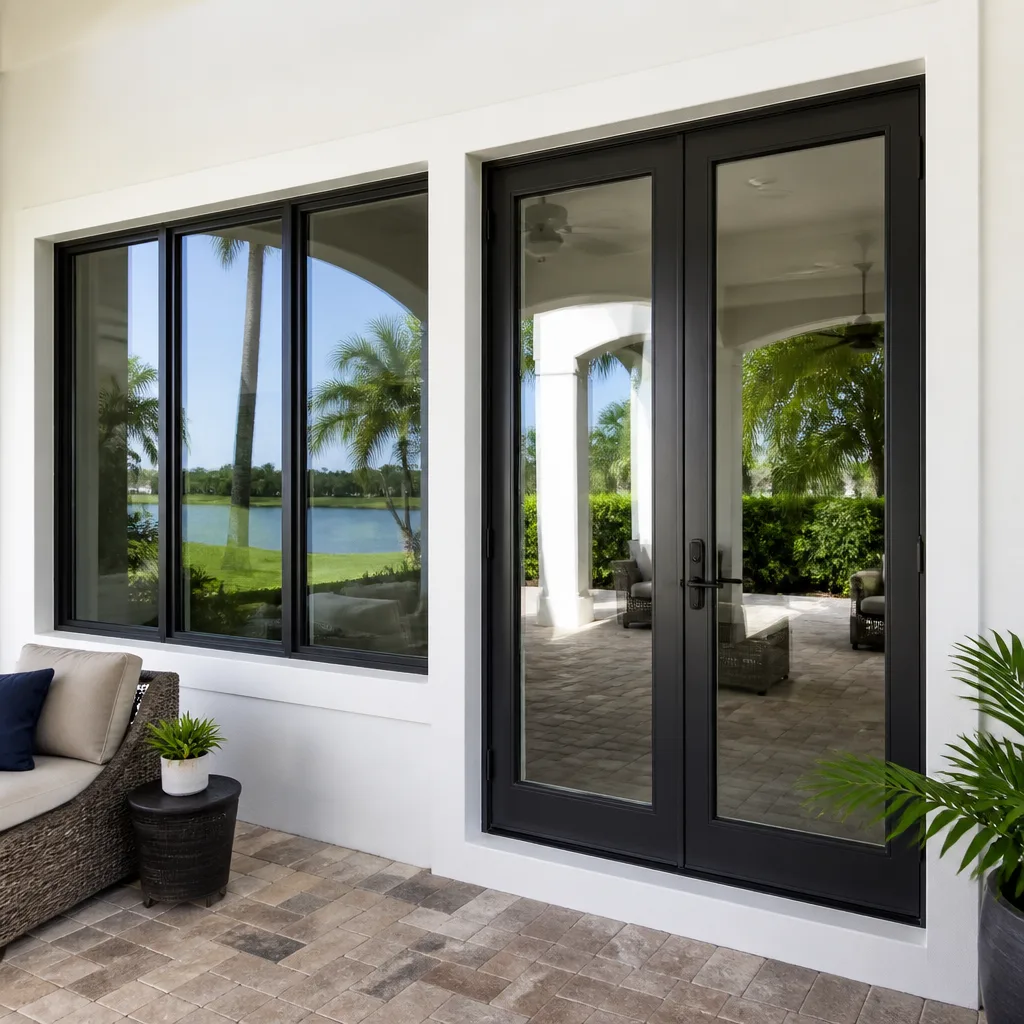 After
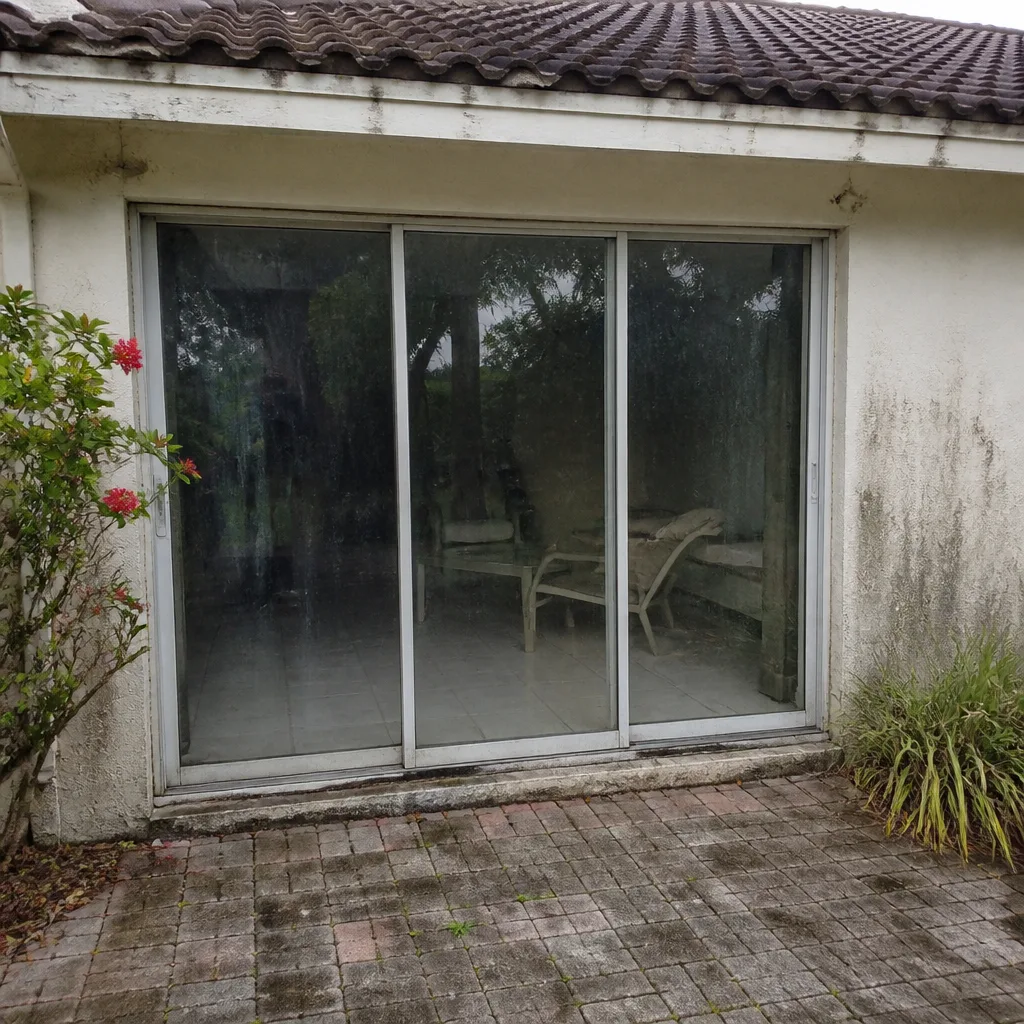 Before
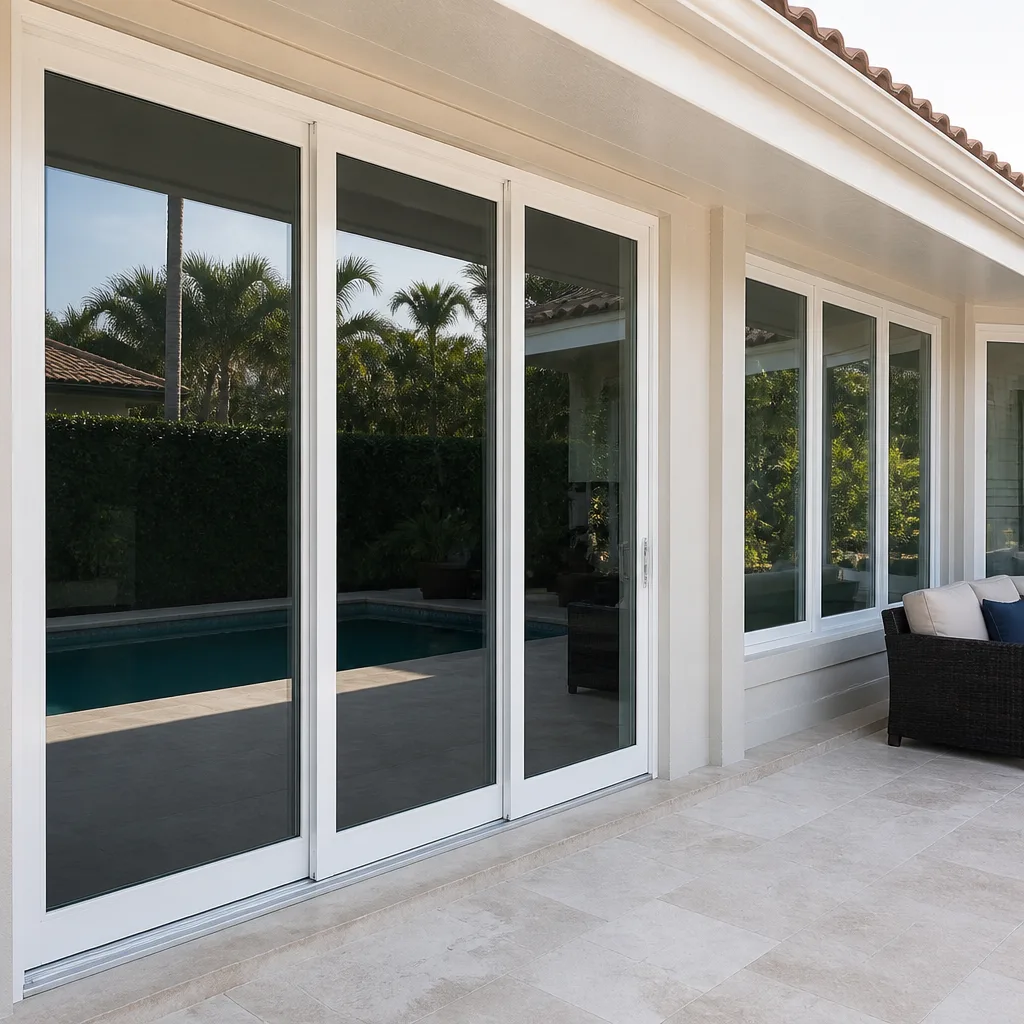 After
The Complete Guide to Windows & Doors in Boca Raton
Most window failures in Boca Raton are not accidents. They are predictable outcomes: a seal that surrendered to salt air, a track that warped under eleven months of humidity, a frame screwed into an opening that was never square to begin with. This guide lays out what actually matters when you replace or repair windows and doors in this climate: the materials that hold up, the installation practices that prevent failures, the Florida Building Code requirements you cannot skip, and the costs to expect. By the end, you will know how to buy windows and doors in Boca Raton the way a glazier would, with your eyes open and a written warranty in your hand.
Quick Answer
Window and door replacement in Boca Raton typically costs $700 to $1,600 per opening installed, with impact-rated hurricane windows running $1,100 to $2,800 per opening. The best performing options for this climate are impact-rated aluminum or vinyl frames with low-E laminated glass, installed by a company that pulls permits, follows Florida Building Code Chapter 16, and registers both manufacturer warranty layers in writing before leaving the driveway. Done right, a full window replacement in Boca Raton takes one to three days for a typical single-story home.
Table of Contents
- How Boca Raton’s Climate Wears Out Windows and Doors
- Impact Windows and Hurricane Protection: What the Code Actually Requires
- Frame Materials Compared: Aluminum, Vinyl, and Composite in South Florida
- Glass Packages That Make Sense in Boca Raton
- What Replacement Windows and Doors Cost in Boca Raton
- How a Proper Installation Happens: Step by Step
- Warning Signs Your Windows and Doors Are Failing
- Common Mistakes to Avoid
- When to Call a Professional
- Frequently Asked Questions
- The Bottom Line
How Boca Raton’s Climate Wears Out Windows and Doors
Boca Raton sits in a coastal humidity band that punishes building materials year-round. The average relative humidity runs above 70 percent most mornings, and the salt content in the air within three miles of the ocean is high enough to corrode untreated aluminum hardware in under a decade. We have replaced window sashes in Royal Palm Yacht & Country Club homes that looked fine from the living room but had salt pitting on the exterior frame you could feel with a fingernail. The climate does not rest, and neither do the forces working against your windows.
Heat is the second enemy. Summer attic temperatures in Boca Raton routinely hit 130 degrees. That heat radiates downward and pushes against the glass from the inside, while direct sun loads the exterior pane. The differential expands and contracts the frame and the seal. Cheap insulated glass units fail under that stress, usually within five to eight years. The fog you see between panes is the seal gone, not a surface smudge. Once that happens, the insulating gas is gone and the window is doing little more than holding back rain.
The third factor is UV exposure. South-facing windows in Boca Raton take direct sun for most of the day, every month of the year. Untreated low-E coatings on budget glass will not stop the slow bleaching of hardwood floors, upholstery, and artwork. The right glass package matters here more than the frame color. We will get to that below.
What this means for a homeowner is straightforward: the windows that work in Ohio or Virginia are not the windows that work in Boca Raton. You need frames that resist corrosion, glass that blocks heat and UV, and installation methods that account for wind-driven rain that can come at a window sideways during a summer storm.
Impact Windows and Hurricane Protection: What the Code Actually Requires
Boca Raton sits inside the High Velocity Hurricane Zone defined by the Florida Building Code. That means any new window or door installed in a residential structure must meet impact-resistance standards. You have two compliant options: install impact-rated windows and doors, or keep non-impact openings protected by code-approved shutters. The moment you replace a window opening, the new unit must be impact-rated or protected.
Impact windows are not just thick glass. A proper impact unit uses laminated glass, similar to a car windshield, bonded between two layers of a polymer interlayer. When a windborne object hits the glass, it cracks but does not shatter out of the frame. The storm stays outside. The pressure inside your home does not spike. That matters because most storm damage in Boca Raton is not from water coming through a broken window. It is from the roof lifting off after the wind pressure equalizes, which happens fast when a window blows out.
We sell and install impact lines from PGT, CGI, and ES Windows, and quote them side by side on paper so the homeowner sees exactly what they are buying. PGT’s WinGuard line is common in Boca Raton for its price-to-performance balance. CGI makes heavier commercial-grade units that some coastal high-rises require. A homeowner in a single-family home in Woodfield Country Club will have different needs than someone in a fourth-floor condo on A1A, and the right specification depends on the opening size, the design pressure rating, and the finish.
Permits are not optional. A licensed contractor pulls the permit, the inspector checks the installation, and the final approval goes on file. When the paperwork is done right, the homeowner has a written record that the job met code. That record matters when you sell the house, and it matters when an insurance company asks for proof of wind mitigation after a storm.
Frame Materials Compared: Aluminum, Vinyl, and Composite in South Florida
Three frame materials dominate window replacement in Boca Raton, and each has a real place depending on the home and the budget. We will lay out the tradeoffs plainly, because the frame choice drives a significant part of the installed price.
Aluminum is the workhorse of South Florida windows. It is rigid, which matters on wide openings and tall sliders where vinyl can flex. Modern aluminum frames with thermally broken construction, meaning a plastic barrier separates the interior and exterior metal, have reduced the heat transfer that gave old aluminum windows a bad name. Marine-grade finishes resist salt corrosion better than the raw aluminum of thirty years ago. For large fixed windows, contemporary sliders, and any opening that needs structural strength, aluminum is the standard we recommend most often in Boca Raton.
Vinyl offers the best insulation per dollar. The frame itself does not conduct heat the way metal does, and multi-chambered vinyl extrusions are good at keeping air-conditioned air inside. Vinyl is also the least expensive frame material for standard double-hung and casement windows. The tradeoff is rigidity: on a very wide slider or a tall fixed pane, vinyl can bow under wind load. In a protected inland neighborhood like Boca Del Mar, that is rarely an issue. On an exposed second floor facing the Intracoastal, it can be.
Composite, sometimes called fiberglass or a wood-plastic blend, splits the difference. It carries the strength of aluminum and the insulation of vinyl in a frame that does not rot or corrode. It costs more, and in our experience the price bump buys real performance on large openings and high sun exposure. We carry Jeld-Wen and Simonton lines for homeowners who want composite or premium vinyl options without jumping to full custom.
The honest answer: there is no single best frame. There is the right frame for the opening, the exposure, and the budget. We quote manufacturer lines side by side so the homeowner can see the difference in writing, not in sales talk.
Glass Packages That Make Sense in Boca Raton
Glass is where most window buyers stop paying attention, and it is where the long-term performance lives. In Boca Raton, the glass package you choose determines how much heat enters the house, how much UV bleaches your floors, and how quietly the house sits when a storm rolls through.
Low-E, or low-emissivity, coating is the baseline for any replacement window in this climate. A good low-E coating reflects a significant share of the sun’s infrared energy back outside, keeping rooms cooler and reducing AC load. The coating is measured by a number called Solar Heat Gain Coefficient, or SHGC. For Boca Raton, you want a SHGC of 0.25 or lower on most windows. That is a specific number, and we put it in writing on every quote.
Laminated glass is required for impact-rated openings, and it delivers a side benefit: sound reduction. A laminated impact unit cuts noticeably more street noise than standard annealed glass. Homeowners along Palmetto Park Road or near I-95 who replace old single-pane windows with laminated impact units often notice the quiet before they notice the energy savings.
Argon or krypton gas between the panes adds insulation. In a cold climate, gas fill is about keeping heat in. Here, the effect is smaller but real, mostly on north-facing windows and on doors where condensation is a concern. We do not push gas fill as a miracle; we quote it when the orientation makes it worth the money.
The practical advice: specify low-E laminated impact glass with a SHGC below 0.25 and you have a window built for Boca Raton. Skip the tinted films sold as aftermarket upgrades; they can void the manufacturer’s glass warranty and they do not perform like a factory-applied coating.
What Replacement Windows and Doors Cost in Boca Raton
Prices in Boca Raton run slightly above the Florida state average because the impact-rating requirement rules out the cheapest product tiers, and because labor rates in Palm Beach County are higher than in the state’s interior. Here are realistic ranges based on jobs we have quoted in the past year, including installation, permitting, and standard finish work.
- Standard impact vinyl double-hung window: $800 to $1,300 per opening installed
- Impact aluminum single-hung window: $900 to $1,500 per opening installed
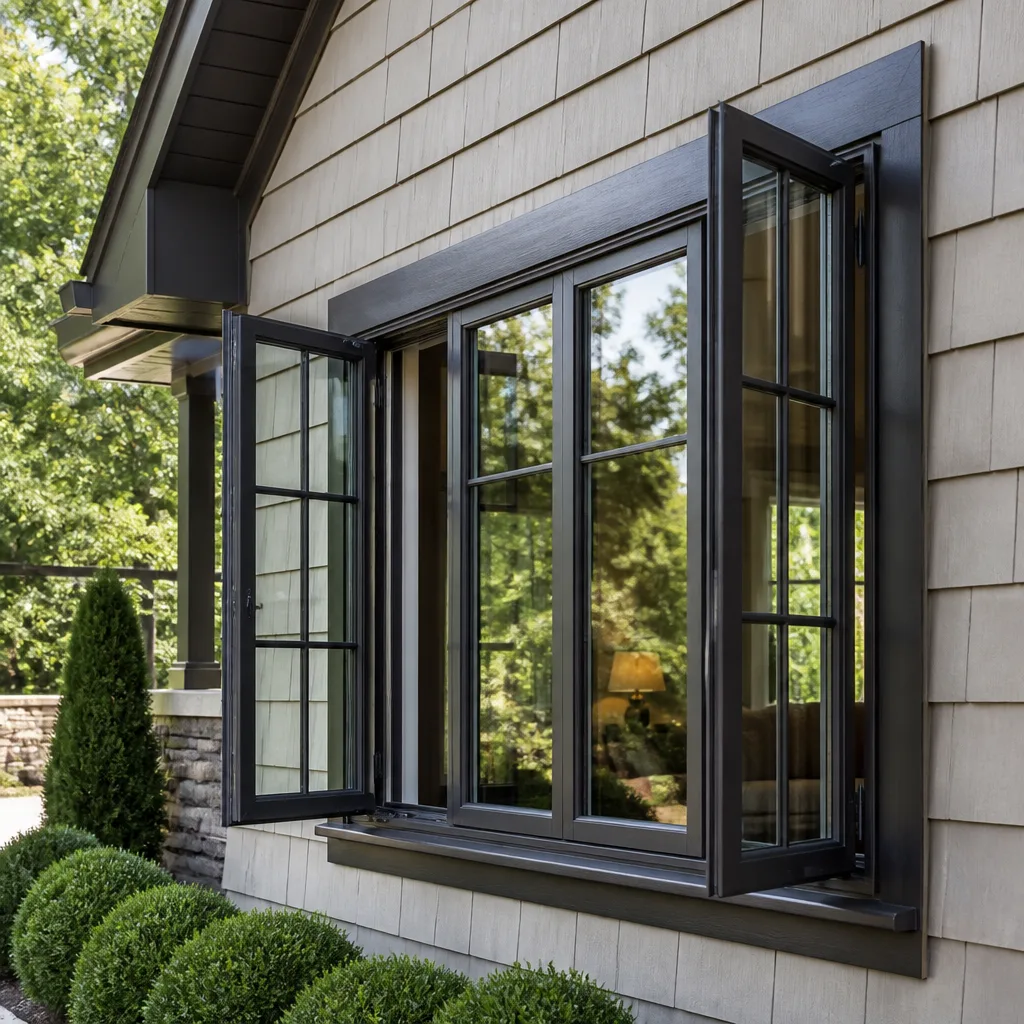
- Impact casement window: $1,100 to $1,800 per opening installed
- Impact sliding glass door (6-foot to 8-foot): $2,800 to $5,500 installed
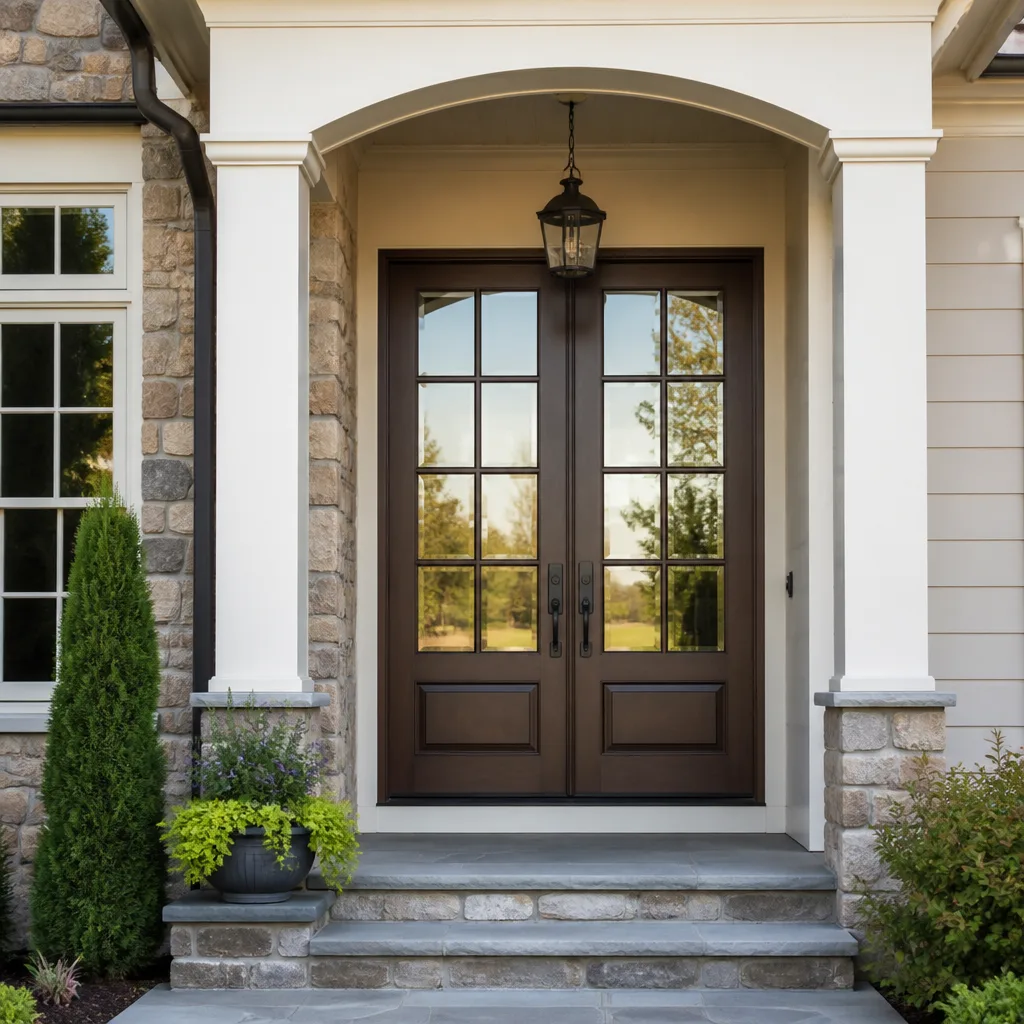
- Impact French door pair: $3,500 to $7,000 installed
- Full-home window replacement (15 to 20 openings) in a typical Boca Raton ranch: $18,000 to $35,000
These ranges assume the existing openings are in reasonable structural shape. If a contractor opens the wall and finds rotted framing, termite damage, or a header that was never installed correctly, the price moves. A reputable company tells you about that before it happens, or has a clear change-order process. Ours is this: we put the scope in writing, and if the scope changes, the price changes only after we show you the problem and you approve the fix. No surprises on the final bill.
Single-door replacement without impact rating, for an interior-facing or protected opening, can run lower. A flush fiberglass or steel entry door with standard glass runs $1,500 to $3,500 installed. Once you add impact glass and a code-compliant frame, expect $2,500 to $5,000.
For homeowners replacing windows in Boca Raton for the first time in twenty-five years, the sticker shock is real. Compare the cost to what the old single-pane windows are costing you every summer in electric bills, and to what a storm claim costs when a window fails. The new unit pays back over time, and the insurance wind mitigation credit on impact windows in Florida recovers part of the cost in reduced premiums.
How a Proper Installation Happens: Step by Step
A good window installed poorly is a bad window. In Boca Raton’s wind-driven rain environment, the installation method is as important as the product. Here is the sequence we follow on every replacement, and what you should expect from any contractor you hire.
- Measure every opening twice. Not once. Twice. The second measurement catches the out-of-square corner and the shifted header that the first measurement missed. If the opening is not square, the fix happens before the new unit goes in.
- Remove the old unit and inspect the rough opening. This is where hidden problems surface: rotted wood from a decade of minor leaks, corroded fasteners, or framing that was never properly flashed. The homeowner should be shown any damage before work continues.
- Repair and prepare the opening. Replace compromised wood, square the corners, and install new sill flashing. In Boca Raton, sill flashing matters because wind-driven rain hits the bottom of the window first.
- Set the new unit with proper shims and fasteners. The window must sit plumb, level, and square in the opening. A unit that is forced to fit an out-of-square opening will bind, leak, and sag within a few seasons.
- Seal the perimeter in layers. Backer rod and sealant, not just a bead of caulk over a gap. On the exterior, flashing tape over the top flange and down the sides. Water gets in through the same gaps every time, and the layering is what stops it.
- Insulate and trim the interior. Low-expansion foam around the frame, then interior trim. The trim is not cosmetic; it covers the gap and protects the seal from UV and moisture.
- Register both manufacturer warranty layers in writing. This is the step most contractors skip. They hand over a brochure and tell the homeowner not to worry. We write the warranty registration before the technician leaves the driveway, with durations stated in plain English. That is the Keystone Standard, and it is the reason we can offer the Done Right Promise without flinching.
If any contractor tells you a full window replacement in Boca Raton can be done in a few hours with no permit, walk away. That is the kind of job that fails, and the homeowner is left holding the bill with no recourse.
Warning Signs Your Windows and Doors Are Failing
Most windows do not fail all at once. They give signals, and the earlier you catch them the cheaper the fix. Here are the signs we tell homeowners in Boca Raton to watch for.
- Condensation between the panes. This is a failed seal, not a weather condition. The insulating gas has escaped and the unit will not perform. If the window is under warranty, a replacement may be available. If not, it is time to budget for a new unit.
- A door that binds in July but swings fine in January. South Florida’s humidity cycle swells wood frames and warps cheap metal. A door that binds seasonally has a frame problem, not a hinge problem.
- Drafts you can feel with your hand on a still day. Weatherstripping on a sliding door wears out. A draft means the seal has failed and air-conditioned air is leaking out around the panel.
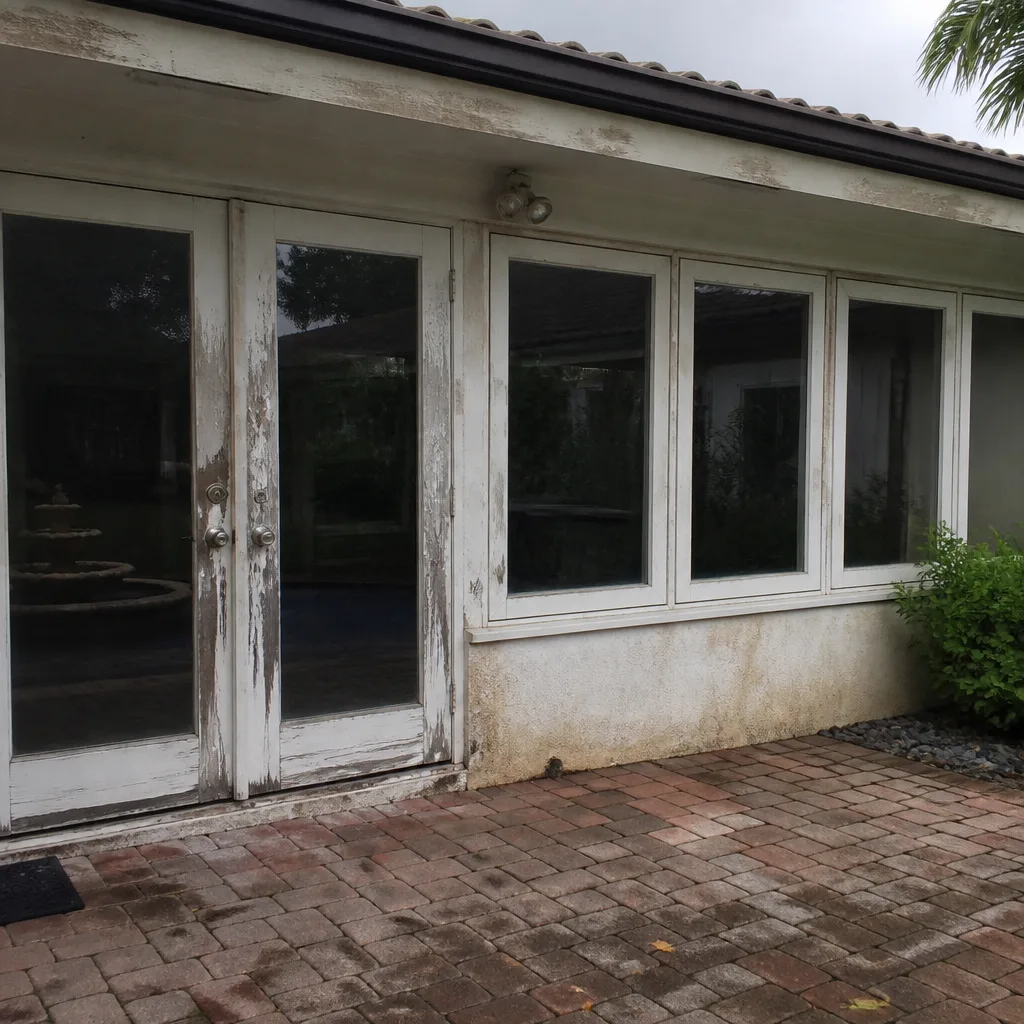
- Soft wood or crumbling caulk around the frame. Water has been getting in. By the time you see the stain inside, the wood behind the wall has been wet for a while. This is not a caulk job; it is a framing repair.
- Windows that rattle during a storm. A window that rattles has loose glazing or worn hardware. In a hurricane, that rattle becomes a failure point.
If you notice any of these, the worst action is to ignore it. The second-worst is to caulk over it and hope. Caulk over a failed seal still leaves a failed seal. The right move is a proper inspection with a written assessment.
Common Mistakes to Avoid
- Buying windows without checking the design pressure rating. Impact-rated is not a single standard. The required design pressure depends on the opening size, the height above grade, and the exposure. Buying a unit rated for inland use and putting it on an oceanfront wall is a code violation.
- Choosing the cheapest quote and assuming all bids are equal. In Boca Raton, a price 40 percent below the field average usually means something is missing: no permit, no impact rating, no warranty registration, or a frame that does not meet code. The cheap bid becomes the expensive lesson.
- Skipping the permit because “it’s just a window swap.” In Florida, replacing a window without a permit is illegal, and when it is discovered during a future inspection or sale, the homeowner carries the liability. Permits are not red tape; they are the written proof the job was done to code.
- Installing aftermarket window film on impact glass. Factory low-E coatings are applied in a controlled process. Aftermarket films trap heat in the glass, can void the manufacturer warranty, and do not deliver the same SHGC performance. If you want tinted glass, order it from the factory.
- Replacing windows without addressing the doors at the same time. A sliding glass door has more glass area than three typical windows. If the doors are thirty years old and the windows are new, the house is still leaking conditioned air and carrying hurricane risk. A phased plan over two years is fine; ignoring the doors entirely is not.
- Trusting verbal promises about warranty coverage. “You’re covered, don’t worry” is not a warranty. If it is not in writing, with the manufacturer’s name and the registration confirmation, it does not exist. We register both warranty layers and hand over the paperwork before we leave.
When to Call a Professional
Any job that involves structural openings, code compliance, or impact glass is a professional job. That means replacing a window, installing a sliding door, fixing a failed seal, or addressing water damage around an opening. These are not projects where a YouTube video replaces a licensed contractor, and in Boca Raton the permit process alone makes DIY replacement impractical for most homeowners.
Call a professional when you see the warning signs above, when you are planning a renovation that touches any exterior opening, or when you want a home to meet current wind mitigation standards for insurance purposes. TruePane Windows & Doors offers free estimates in Boca Raton, with straight answers and written line-item quotes. Call (561) 264-1337.
Frequently Asked Questions
Impact window replacement in Boca Raton typically costs $800 to $1,800 per opening installed, depending on the frame material, the size of the opening, and the design pressure rating required. A full home with 15 to 20 openings runs $18,000 to $35,000. Call (561) 264-1337 for an exact quote, estimates are free.
Yes. In Boca Raton and throughout Palm Beach County, replacing a window or exterior door requires a building permit under the Florida Building Code. A licensed contractor pulls the permit and the work is inspected. Any contractor who suggests skipping the permit is asking you to take on legal and insurance risk.
Impact-rated windows are tested to a specific standard: they must survive a windborne missile impact and then withstand thousands of positive and negative pressure cycles. “Hurricane-proof” is a marketing term with no code definition. In Florida, the standard is impact-rated per Florida Building Code, and that is the specification to ask for in writing.
Well-installed impact windows in Boca Raton carry a realistic service life of 20 to 30 years, with the frame outlasting the glass seals. Poorly installed units or budget non-impact windows can show seal failure within 5 to 8 years, especially on west-facing and south-facing walls with heavy sun and salt exposure.
Impact-rated windows and doors typically qualify for wind mitigation credits on Florida homeowners insurance, and many insurers offer substantiated premium reductions for homes with documented impact protection. The credit varies by carrier and policy, and the written permit record plus both warranty registrations are the documentation insurers ask for. Check with your agent after installation.
You can phase replacement, and many homeowners in Boca Raton do exactly that, starting with the windows that get the most sun or the most wind exposure. A phased plan over two to three years is common. The tradeoff is slight: multiple permit fees and multiple mobilizations cost a bit more than doing the whole house at once, but the job gets done right either way. Call (561) 264-1337 to map out a sequence that fits your budget.
The Bottom Line
Windows and doors in Boca Raton are not a commodity purchase. The right units, correctly installed and properly permitted, protect your home through hurricane season, cut your cooling costs year-round, and give you the paperwork you need when you sell. The wrong units, installed without permits and without written warranty registration, fail quietly and expensively. Buy impact-rated glass with low-E coating rated for this climate, hire a contractor who measures twice and registers warranties in writing, and keep the paperwork. That is the whole game.
Written by the team at TruePane Windows & Doors.
Six Reasons Homeowners Choose TruePane Windows & Doors
Impact systems engineered to design pressures up to +/-100, matched to your wind zone - your openings hold when the storm arrives.
Low-E insulated impact glass from our manufacturer lines commonly cuts monthly cooling bills 20-30%.
Laminated impact glass shuts out up to 40% of outside noise - traffic, neighbors, weather.
Monitoring services run $30-90 a month. Laminated impact glass resists forced entry around the clock, with no subscription.
Florida homeowners average around 25% savings on the windstorm portion of their policy after protecting every opening - some homes qualify for more.
A full impact package upgrades curb appeal, buyer confidence and appraised value in one project.